Planning that respects the scenery, the light, and the space.
The Jezreel Valley is not just an open landscape. It is a wide horizon, soil in shades of ochre, sharp morning light and soft evening glow, a wind passing through fields that serves as a reminder that a home is not detached from its surroundings, but rather a part of them. Designing a house in the Valley requires heightened sensitivity. There is not enough functional structure. It requires planning that knows how to frame the landscape, seal to the right extent, open in the exact places, and choose materiality that speaks with the ground rather than above it.
When looking for an architect in the Jezreel Valley, the question is not just who knows the local planning committee. The question is who knows how to articulate a home that holds a quiet presence within an open space. At Israelevitz Architects, we approach every project in the Jezreel Valley region as an encounter between contemporary architecture and ancient landscape. The result is not ostentatious, but precise.
What Makes Planning in the Jezreel Valley Unique?
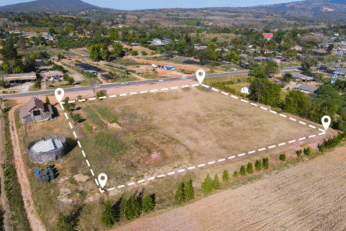
The plots in the Valley are more generous, but the exposure is greater. A house in an open area is examined from every direction. Therefore, meticulous planning of masses, deep shading, balanced proportions, and a direct connection between the interior and exterior are required.
An architect in the Izreel Valley must understand:
- How to create privacy without becoming secluded.
- How to frame the view instead of blocking it.
- How to use natural finishing materials that deepen with age.
- How to bring in natural light without creating thermal load.
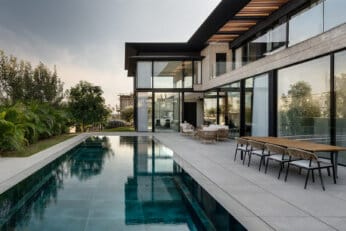
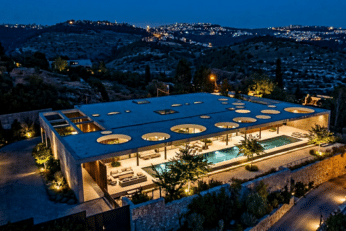
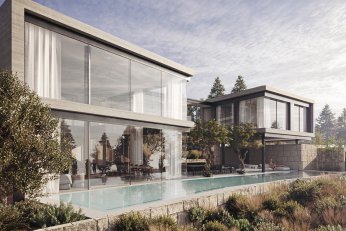
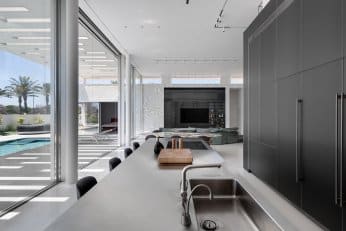
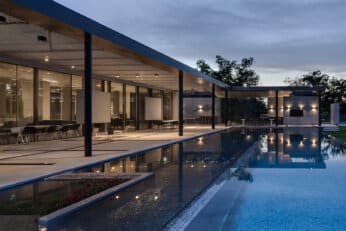
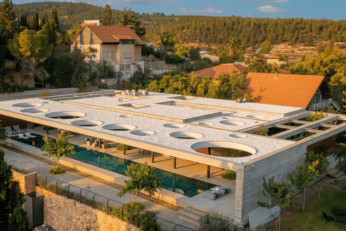
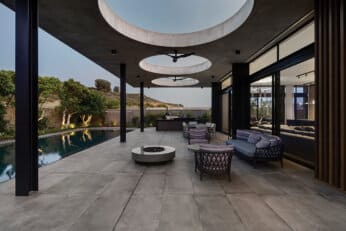
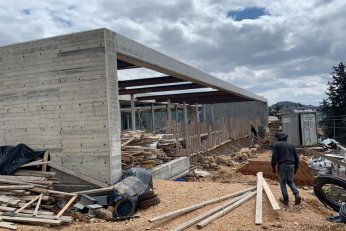
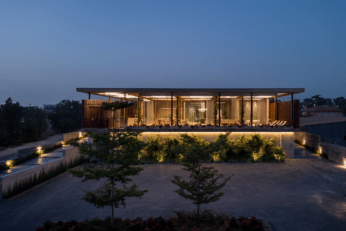
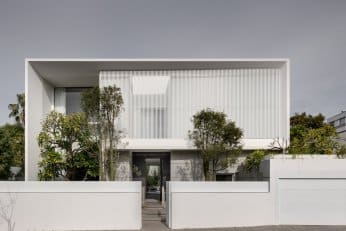
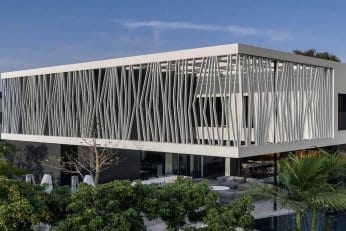
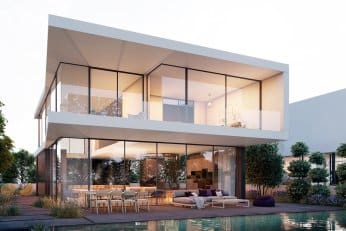
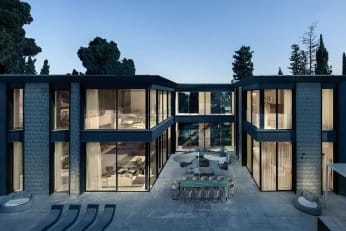
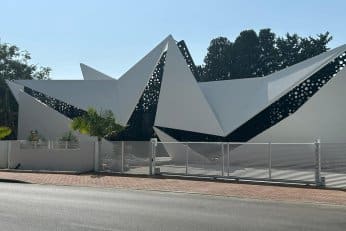
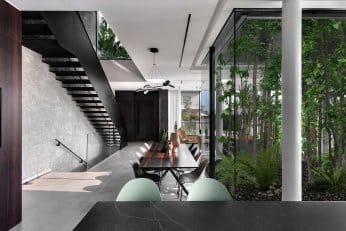
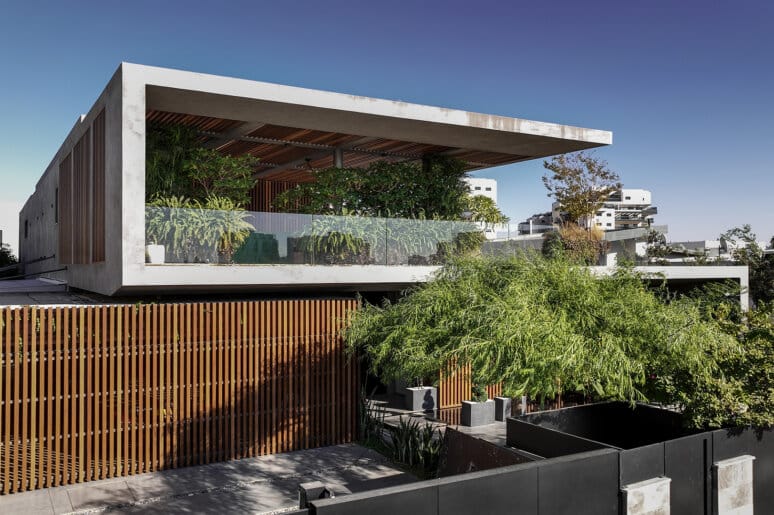
In a project we completed in the Valley, the Origami House, the starting point was not only the plot and the view but also the specific vision of the homeowners. They requested a contemporary home, free of ornamentation, yet possessing material depth and a quiet presence. From this dialogue, a precise architectural language was born: concrete masses in balanced folds, wide openings that frame the line of the fields, and a seamless connection between inside and out that is natural rather than dramatic.
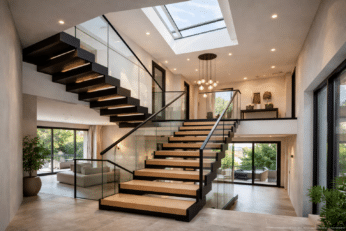
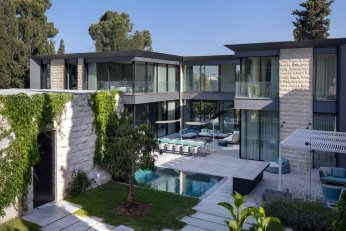
Finishing materials were carefully selected, not only for their immediate beauty but with thought to how they will age and deepen over the years. Stone, concrete, and wood are not decorative elements, but part of a complete system that respects the environment and the family’s lifestyle.
Luxury in the Valley – Not Ostentation, but Depth
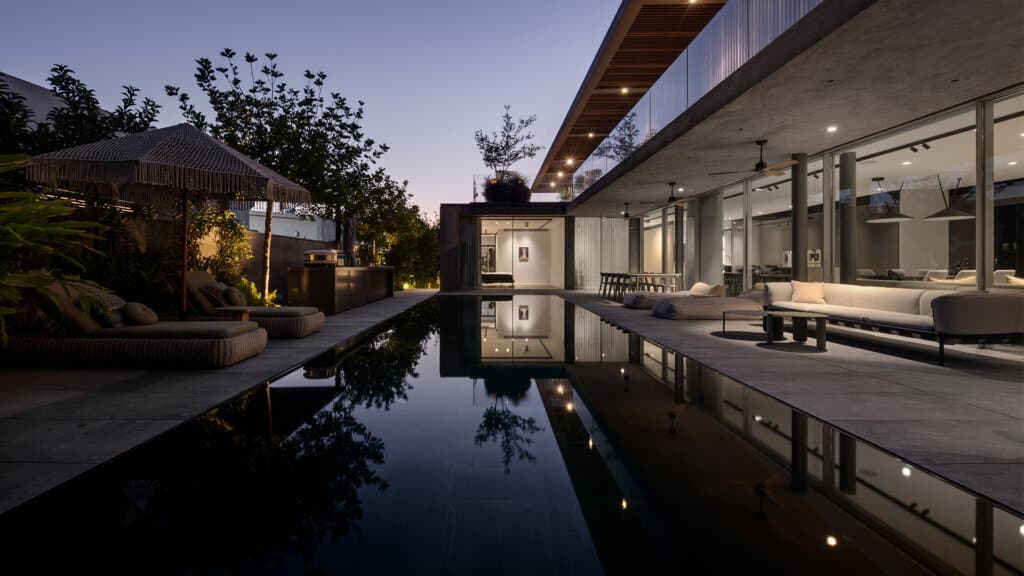
Luxury in the izreel Valley region is not a loud statement, but depth. It is evident in the balance between mass and light, in the choice of materials that will remain relevant even a decade from now, and in a sense of completeness that does not depend on trends.
At Israelevitz Architects, we insist on precise materiality: exposed concrete with a meticulous finish, local stone in a deep hue, thin and delicate iron, and solid wood that speaks quietly. Experience shows that specifically in the Jezreel Valley, where the space is open and the scenery is dramatic, a well-planned house does not need to shout. It needs to stand with confidence.
Common Mistakes in Planning in the Jezreel Valley Region
Planning in the izreel Valley sometimes seems simple on the surface: a wide plot, open view, a sense of freedom. But this very openness demands higher responsibility.
- Isolation from the view: One common mistake is designing a house that is too closed within an open space. Sometimes, out of a desire for privacy, opaque structures are created that miss the quality of the landscape and the play of light.
- Ignoring the climate: In the Jezreel Valley, the sun is direct and strong, and winds are significant. Large openings without deep shading can lead to thermal discomfort and increased dependence on air conditioning.
- Inappropriate “Urban” language: We sometimes encounter houses designed in a distinctly urban style—flat facades or materials that do not age well in a rural environment—which do not correspond with the Valley’s wide horizon.
- Lack of long-term vision: Choosing finishing materials unsuitable for open environmental conditions or failing to consider the family’s future evolution can
- The Work Process – From Concept Planning to Meticulous Supervision
Choosing an architect in the Izreel Valley involves much more than drawing plans. Our process includes:
- In-depth study of the plot and light directions.
- Formulating an architectural concept tailored to the landscape and the family.
- Detailed planning with emphasis on materiality and details.
- Preparation of the licensing file and management with local authorities.
- On-site guidance and supervision up to the level of the final finish.
A home in the Valley is not a standard project. It is a long-term move that defines quality of life for many years.