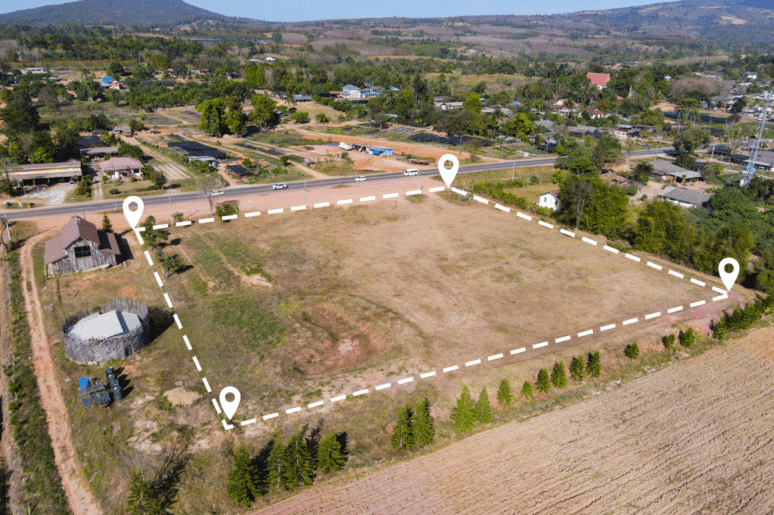
Two plots of land might be located in the very same city, sometimes even on the same street, yet present completely different potential in terms of building rights, development options, and the future ability to upgrade the property. Therefore, if your goal is to buy land in israel, the critical question is not just where the land is located, but what can actually be built on it in the years to come.
In the 2026 real estate market, where information is more accessible than ever but also more confusing. experienced investors understand that a smart decision starts with a deep planning and zoning evaluation. This is where an architectural perspective becomes essential, allowing investors to analyze land for sale in israel not just for what it looks like today, but for what it can legally become tomorrow.
A Good Investment Opportunity Starts with Proper Due Diligence
When evaluating land for sale in israel, it is easy to be swept away by marketing promises, impressive 3D renderings, or grand declarations about future developments. An architect, however, looks at a much deeper layer of data.
An architect examines approved master plans, plans currently in the pipeline, existing building rights, and potential zoning restrictions that could hinder future development.
Sometimes, a plot that looks incredibly promising on paper turns out to have significant legal or planning limitations. In other cases, land that appears less attractive at first glance may hide substantial long-term appreciation potential.
This is exactly why savvy international investors who want to safely buy land in israel choose to involve professionals at the very initial screening stage, well before entering negotiations or signing a contract.
What Does an Architect Check Before Purchasing Investment Land?
A professional architectural and planning analysis covers several critical layers:
- Land designation according to approved municipal and national master plans.
- Existing and future building rights (zoning laws).
- Local and regional master plans and development trends.
- Potential building restrictions (such as environmental protections or height limits).
- Planned expropriations or designated future public spaces.
- Accessibility and infrastructure, both current and projected.
More often than not, the most critical data point is not the current state of the land, but the zoning changes scheduled to take place in the area over the coming years. An investor who decides to buy land in israel without a thorough review of these parameters may later discover that reality does not align with their expectations.
Not All Appreciation Potential Appears in the Sales Pitch
One of the greatest challenges in the investment land sector is the gap between marketing materials and planning reality. Many advertisements focus heavily on future growth, but it is vital to understand which plans are actually being advanced, what stage they are in, and their level of certainty.
Among other factors, an architect examines:
- Are new employment and commercial zones expected nearby?
- Are major public institutions planned for the area?
- Are there upcoming transportation projects (such as highways or rail lines) that could boost the area?
- Are there concrete plans to expand neighboring residential areas?
- Is the surrounding environment slated to undergo urban renewal and development?
This type of analysis provides a macro-view of the land’s true value, highlighting both hidden opportunities and underlying risks.
Why Topography and Infrastructure Matter More Than You Think
While many buyers focus strictly on location and price, physical characteristics often dictate the financial viability of a project.
Challenging topography can lead to exorbitant development costs. Steep slopes, complex drainage requirements, or the need for extensive retaining walls can heavily impact future construction budgets and feasibility.
Existing and planned infrastructure is equally critical. Road connections, public transit, water and sewage systems, schools, and community services are all fundamental to the land’s ultimate valuation. From an architectural viewpoint, a plot of land is never just a blank space on a map; it is part of a complex, living ecosystem that must be fully understood before you make a commitment.
What Can We Learn from Israel’s 2026 Development Trends?
In recent years, significant development processes have been reshaping many areas across the country. Whether your strategy is to Buy land in golan heights israel, look for high-yield Land for sale Galilee Israel, or evaluate high-demand central districts like Raanana, Hod Hasharon, Kfar Yona, Netanya, or Herzliya—the city or region itself is only part of the equation.
The more critical data lies in the specific zoning trends taking place within that boundary. Are there active expansion plans? Are new commercial hubs being built? Is transportation infrastructure improving? Are major public investments being funneled into the area?
These are the questions that unlock the true timeline of appreciation. Instead of simply searching for a “winning city,” investors should focus on the quality of the regional planning and the direction of local growth.
The Most Expensive Mistake in Buying Investment Land
One of the most common pitfalls is making a purchase based solely on location, price, or vague future promises. Investment land is a complex asset class, and the most vital information is often invisible to the naked eye. Making a move without an ordered, professional planning review can lead to project delays, financial loss, and unexpected future expenses.
Because land is inherently a long-term investment, it is crucial to look at the complete, verified planning landscape rather than relying solely on promotional brochures presented at the sales office.
Why Involve an Architect Before Securing Your Purchase?
Experienced investors know that the most valuable due diligence happens before the dotted line is signed. An architect does not replace a financial advisor or a licensed appraiser; rather, they provide a unique structural perspective. They clarify exactly what can legally be built on the land in the future, identify existing bottlenecks, and pinpoint the true drivers of appreciation. In many cases, this early check saves investors from costly mistakes and ensures a well-informed decision.
At Israelevitz Architects, we guide international investors through the initial evaluation stages of land acquisition with a broad planning and strategic lens. Our goal is not just to analyze what exists today, but to help you identify the true future potential of the land.