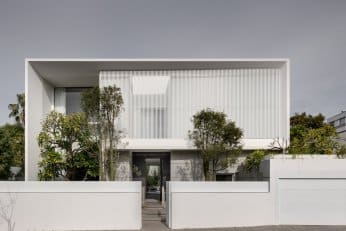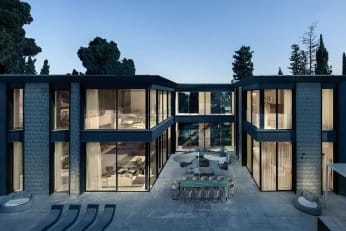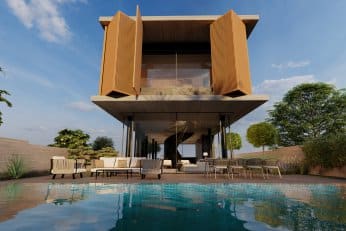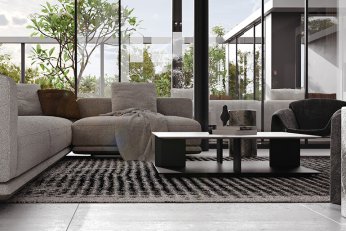
This is particularly relevant when planning a private home. Your current lifestyle, family routines and expectations do not disappear when you move countries. The challenge is to translate them into a home that feels distinctly yours while responding naturally to life, climate and architecture in Israel.
For families moving to Israel from America, that process can begin thousands of miles away.
Start With the Life You Want to Live in Israel
Planning a home before moving to Israel begins with lifestyle rather than floor plans. A good architectural brief considers how the family lives today, what will change after the move and how the home will need to serve them in the years ahead.
This can involve questions that initially seem less architectural than they actually are.
Will adult children or grandchildren live nearby? Will family and friends from the United States visit frequently? Do you need comfortable guest accommodations for longer stays? Will you continue working with businesses overseas and need a private home office? How important is entertaining? Do you imagine large family dinners, quiet evenings outdoors or both?
Storage, privacy, accessibility and the relationship between shared and private spaces also matter. A home designed for a couple making the move today may need to accommodate a much larger family gathering tomorrow.
These conversations give an architect something more valuable than a list of desired rooms. They provide an understanding of the life the architecture needs to support.
Translating an American Lifestyle Into an Israeli Home
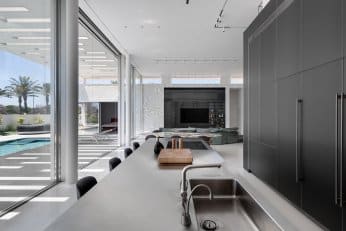
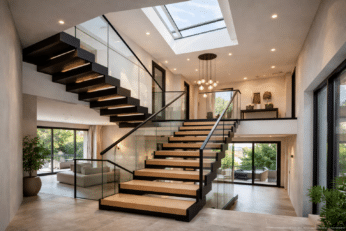
Families moving to Israel from the USA often arrive with expectations shaped by the homes they know. Generous kitchens, substantial storage, spacious primary suites, dedicated work areas and comfortable accommodation for guests may all be important.
But designing a home in Israel should not mean simply recreating an American house in a different country.
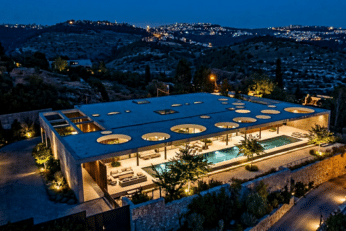
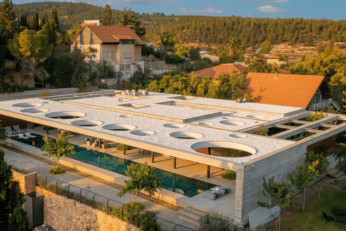
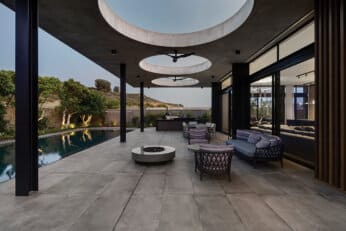
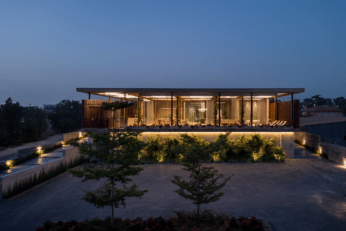
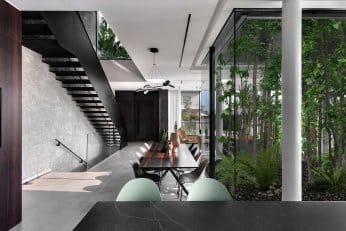
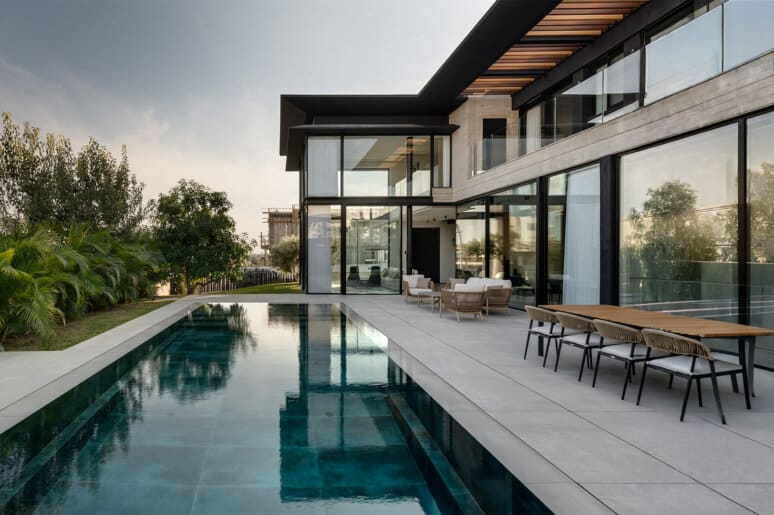
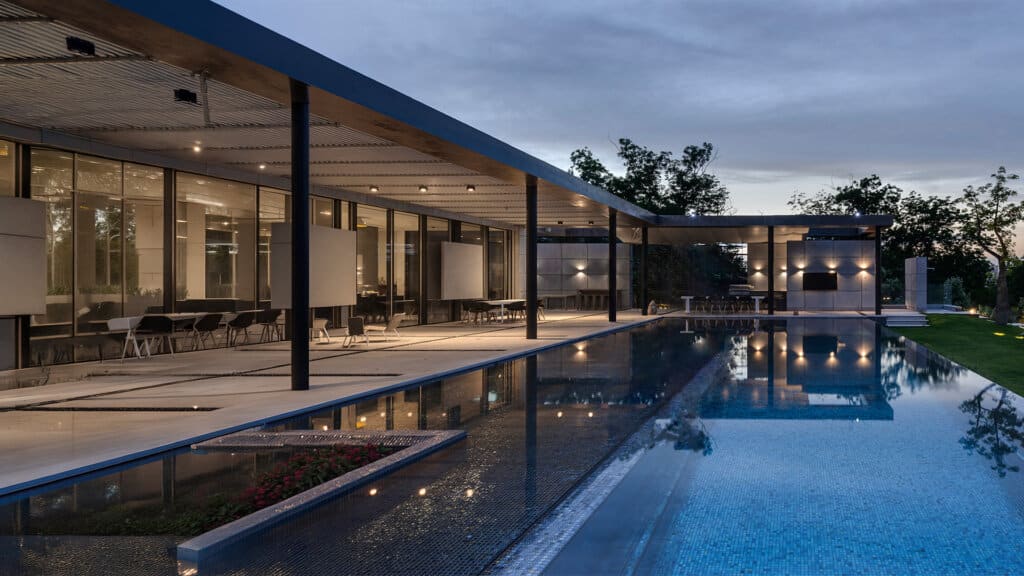
Israeli climate, light and outdoor living create different architectural opportunities. Terraces, gardens, pools, shaded areas and large openings can make the connection between inside and outside an important part of daily life. Orientation and natural light influence not only the appearance of a house but also how spaces feel and function throughout the day.
The aim is to bring the two worlds together.
A family should not have to abandon the elements of its current lifestyle that matter to it. At the same time, the architecture can take advantage of what living in Israel offers.
The result should feel neither imported nor generic. It should feel like your home, designed specifically for your life in Israel.
What Can You Plan Before Moving to Israel?
A significant part of the architectural process can begin while you are still living in the United States. Distance changes how the process is managed, but it does not prevent meaningful design work or informed decision-making.
Before relocating, families can already work with their architect on:
- defining their lifestyle, priorities and requirements for the home
- developing the architectural concept and spatial organization
- reviewing plans and design alternatives
- discussing materials, finishes and architectural details
- reviewing visualizations and understanding how spaces will look and connect
- making key design decisions through scheduled online meetings
- coordinating the project timeline with the family’s expected move to Israel
This is particularly valuable when moving to Israel is planned months or even years ahead. Instead of treating that period as waiting time, it can become part of the project’s planning timeline.
How Does Architectural Planning From the USA Work?
Planning a home remotely requires a clear process, regular communication and a local architectural team capable of moving the project forward in Israel. Clients should remain closely involved in decisions about their home without having to personally coordinate everything happening on the ground.
Online meetings allow families to review plans, discuss alternatives and make decisions together with the architectural team. Digital drawings and visualizations can help clients understand not only individual rooms, but proportions, circulation, materials and the relationship between different parts of the house.
The key is not simply having the technology to communicate remotely. Zoom meetings are easy. What matters is creating a process in which the family knows what is being decided, why it matters and what the next stage will be.
For international clients, clarity and continuity become especially important. A well-managed process reduces the sense that the project is happening somewhere else without them.
Designing a Personal Home From Thousands of Miles Away
Architecture is personal. That does not change because the client and architect are temporarily in different countries.
In fact, when a family is moving to Israel as a foreigner or returning after many years abroad, understanding its background can become even more important. Expectations around space, privacy, hospitality and daily routines may differ from those commonly assumed in local residential planning.
The architect therefore needs to listen beyond the room list.
Perhaps Friday dinner regularly includes twenty people. Perhaps relatives from America stay for several weeks rather than a weekend. One partner may work according to US hours. Adult children may need independent spaces when visiting. Outdoor areas may be expected to function as genuine extensions of the living space rather than simply as a garden around the house.
These details shape architecture.
They influence circulation, proportions, connections between spaces and even where privacy is needed. When they are understood early, the house can be planned around the family rather than requiring the family to adapt to the house later.
Having an Architectural Team on the Ground in Israel
When you are still living abroad, your architectural team becomes your professional presence in Israel. Its role includes maintaining the design vision while coordinating the local processes and professionals needed to move the project forward.
For the client, this creates an important distinction between being involved and having to manage everything personally.
You should be involved in the decisions that define your home: how it feels, how it functions, which spaces matter most and which materials reflect the architectural vision. You should not need to be physically present in Israel for every conversation or coordination issue.
Israelevitz Architects has been designing private homes in Israel since 1998. For clients living abroad, the architectural process combines direct involvement in the design with a team located in Israel that can maintain continuity between decisions made remotely and the work taking place locally.
This is particularly important for families whose move has a long timeline. Their home can continue progressing even while their everyday life remains in the United States.
Plan for the Life After the Move
When people talk about moving to Israel, attention naturally focuses on the move itself. But a home is being designed for what comes afterward.
The first months are only the beginning.
A thoughtfully planned home should continue to work as family life changes. Children grow older, relatives visit, grandchildren arrive, working patterns change and spaces that once served one purpose may need to serve another.
For families moving from America, there may also be an ongoing relationship with two countries. Friends and relatives will visit from abroad, work may continue across time zones and the home may become an important gathering point for family members living in different places.
Thinking about these realities during the design stage can produce a house that is not only beautiful on completion day but remains relevant years later.
When Should You Start Planning Your Home in Israel?
You do not need to wait until you have packed the boxes to start planning your home. If moving to Israel is already a concrete part of your future, the architectural conversation can begin earlier.
Starting early creates room to think rather than rush.
It allows you to define priorities, explore ideas, understand how your current lifestyle can translate into your future home and make decisions while there is still time to consider alternatives.
For families moving to Israel from America, this can also create a sense of continuity between two stages of life. The home in Israel is no longer something that begins after the move. It becomes part of preparing for it.
At Israelevitz Architects, the process begins with understanding the people who will live in the house: how they live now, what they expect from their future in Israel and what home means to them.
Because even when the architectural process begins from thousands of miles away, the house itself should feel completely at home in Israel.